
What Taxes and Fees Apply to Importing AI Vending Machines?
There is no single import-tax percentage that applies to every AI vending machine. U.S. landed cost depends on the final HTS classification, country of origin, customs value, current trade measures, shipping mode, Incoterm, entry structure, broker charges, inland delivery, and destination tax treatment.
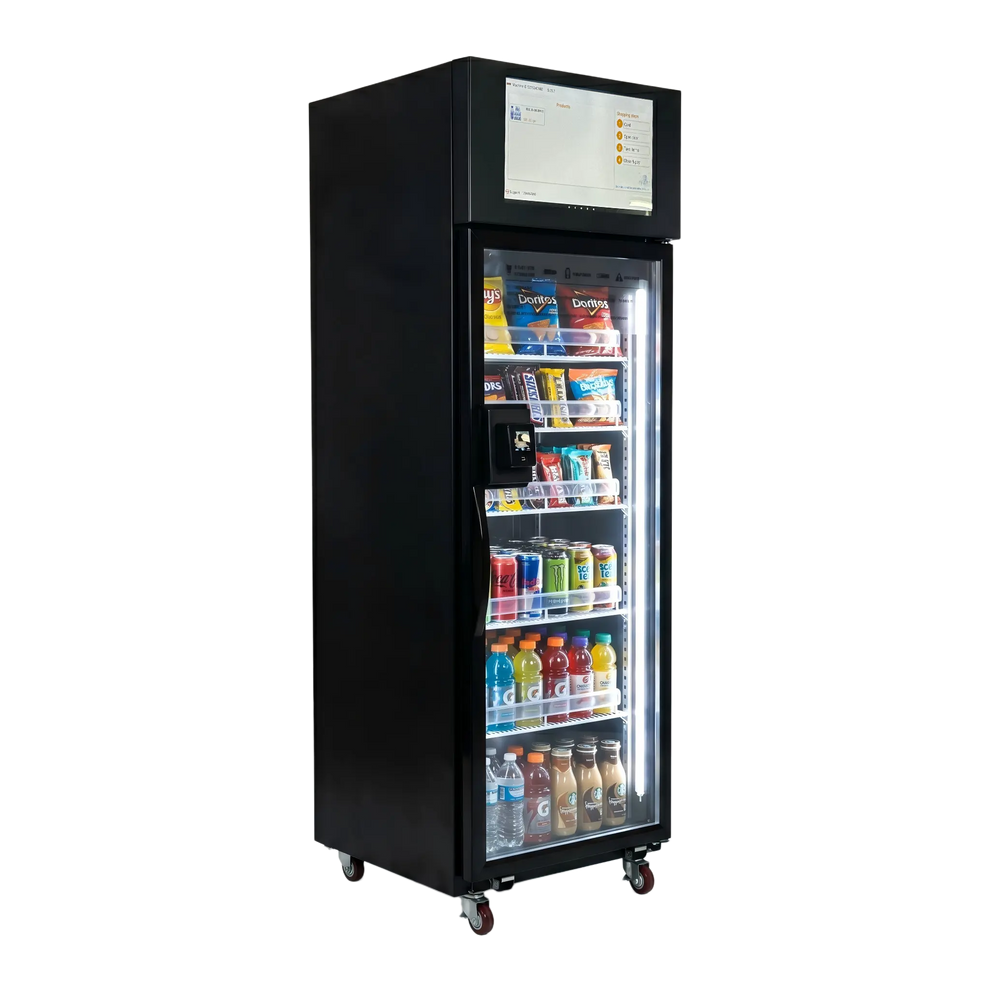
Quote rule: freeze the machine configuration, origin, packing, Incoterm, destination, and importer-of-record responsibility before comparing totals.
Direct answer: budget more than customs duty. A complete U.S. import model should cover equipment and packing, freight and insurance, duty and any additional trade measures, customs processing, bond and brokerage, port or terminal charges, inspection or storage risk, inland delivery, compliance work, and applicable state or local tax.
Do not use a supplier's estimated tariff as a binding classification decision. Ask the customs broker to confirm the entry strategy from the final technical specification, bill of materials, origin evidence, commercial terms, and shipment date. This guide is a procurement framework, not legal, customs, or tax advice.
What Costs Apply When Importing an AI Vending Machine?
The tariff line is only one input. Build the estimate at shipment level, then allocate the total across units. Keep verified government charges separate from broker, carrier, supplier, and domestic operating costs.
Government and customs charges
- Customs duty based on the accepted classification, origin, and effective tariff schedule.
- Additional duties or trade remedies when applicable to the product and origin.
- Merchandise Processing Fee for entries where it applies.
- Harbor Maintenance Fee for qualifying ocean cargo.
- State or local tax treatment after import, where applicable.
Clearance and security costs
- Customs broker entry, classification, and document-review fees.
- Single-entry or continuous bond cost, depending on the import program.
- Importer-of-record setup, power-of-attorney, and related administration.
- Examination, demurrage, detention, or storage when delays occur.
Logistics costs
- Export packing, pickup, origin handling, and export clearance.
- International freight, insurance, destination handling, and terminal charges.
- Port-to-warehouse or final-site delivery, appointment, liftgate, and inside delivery.
- Uncrating, placement, installation, commissioning, and packaging disposal.
Product-readiness costs
- Electrical configuration and site compatibility.
- Payment-terminal approval, connectivity, and software onboarding.
- Documentation or testing required for included radio, electronic, or refrigeration components.
- Labels, manuals, spare parts, training, and local technical support.
Equipment + export packing + origin charges + freight + insurance + duty + additional trade measures + processing fees + bond + brokerage + destination charges + inspection/storage + inland delivery + compliance + applicable tax
Calculation rule: record the source, date, currency, and owner for every line. Use a contingency line for costs that are possible but not yet confirmed; do not hide them inside the equipment price.
Classification, Origin, and Customs Value Drive the Result
Freeze the technical identity first
An AI vending machine may combine a cabinet, refrigeration system, touchscreen, cameras or sensors, controller, payment terminal, modem, lighting, and software. Classification support should describe the complete imported configuration and its principal function rather than relying only on a marketing name.
| Input | Question to resolve | Evidence to collect | Owner |
|---|---|---|---|
| Product identity | What is imported as one unit, and what is shipped separately? | Model, photos, specification, bill of materials, function description | Supplier and buyer |
| HTS classification | Which tariff provision fits the final configuration? | Broker review, tariff notes, prior rulings where relevant | Importer and broker |
| Country of origin | Where do origin rules place the finished product and key modules? | Manufacturing statement, supplier declarations, component records | Supplier and importer |
| Customs value | Which payments, assists, packing, commissions, or other additions belong in value? | Purchase order, invoice, payment terms, tooling and packing records | Importer and broker |
| Entry date | Which tariff schedule and trade measures are effective? | Planned arrival and entry dates, broker confirmation | Forwarder and broker |
Do not treat origin as the ship-from country
Country of origin is a customs determination, not simply the port from which a container departs. Transshipment or final packing in another country does not automatically change origin. Obtain origin evidence before the purchase order is final if origin can change duty exposure.
Use the current tariff schedule
Tariff provisions and trade measures can change. Check the current U.S. Harmonized Tariff Schedule and have the importer or licensed customs broker validate the entry. A historical rate in an article, quotation, or old shipment is not a reliable rate for a future entry.
Compare one frozen WEIMI configuration
Send destination, quantity, product type, cooling range, payment market, electrical standard, and preferred Incoterm. WEIMI can itemize the supply scope for your broker and forwarder.
How Incoterms Change an AI Vending Machine Quote
Incoterms allocate delivery tasks, costs, and risk between seller and buyer. They do not by themselves determine customs classification, origin, valuation, title, payment timing, or product compliance. State the named place and the agreed Incoterms edition in the purchase order.
| Quote basis | Supplier scope commonly ends around | Buyer must clarify | Comparison risk |
|---|---|---|---|
| EXW | Making goods available at the named facility | Pickup, export formalities, origin handling, freight, insurance, import, delivery | Low headline price with many buyer-side costs |
| FCA | Delivery to the named carrier or place with agreed export responsibilities | Exact handoff point, loading, origin fees, main freight, import and delivery | Different named places produce different totals |
| FOB | On-board delivery at the named ocean port | Ocean-only suitability, origin charges, freight, insurance, destination and import costs | Port and terminal inclusions may be unclear |
| CIF | Ocean freight and minimum required insurance to the named destination port | Risk transfer, destination handling, import charges, inland delivery, insurance adequacy | Freight is included, but landed delivery is not |
| DAP | Delivery to the named place, ready for unloading | Importer of record, duty, tax, clearance, unloading, accessorial charges | Delivered is not the same as duty paid |
| DDP | Broad seller delivery responsibility including import obligations | Who can legally act as importer, how duty/tax is documented, post-entry support | A simple total can obscure importer and compliance responsibilities |
Normalize every quotation
Create one worksheet with the same currency, exchange-rate date, destination, machine configuration, quantity, packing dimensions, shipment mode, Incoterm, importer-of-record assumption, and delivery scope. Use the AI vending machine total-cost guide for acquisition inputs and the shipping time and cost guide for logistics planning.
Quote rule: the lowest equipment or freight number is not necessarily the lowest landed cost. Compare identical scope through final delivery and commissioning.
Import Documents to Prepare Before the Machine Ships
Commercial documents
- Purchase order and signed commercial terms.
- Commercial invoice with accurate seller, buyer, description, value, currency, origin, and Incoterm.
- Packing list with package count, dimensions, net weight, and gross weight.
- Transport document and insurance evidence when applicable.
Product documents
- Model and serial-number list when available.
- Photos, technical specification, and functional description.
- Bill of materials or component detail needed for classification and origin review.
- Electrical, wireless, refrigeration, payment, and software configuration.
Customs documents
- Importer-of-record details and broker power of attorney.
- Classification and origin support retained in the import file.
- Bond arrangement for the planned entry structure.
- Entry and release documents returned by the broker.
Deployment documents
- Site power, network, access, floor, and temperature requirements.
- Delivery appointment and unloading plan.
- Installation, acceptance, training, warranty, and support scope.
- Product and payment test plan before customer launch.
Match the invoice to the physical shipment
Generic descriptions such as "machine" or "sample" create avoidable questions. The invoice, packing list, purchase order, and technical specification should consistently identify the imported system. Separately listed spare parts, routers, payment terminals, or accessories may require their own classification review.
For machine-use requirements after import, review the AI vending machine regulations and compliance guide.
Six Steps From Factory Quote to U.S. Delivery
Define the complete system
Freeze machine model, products, cooling, recognition, payment, connectivity, electrical standard, accessories, quantity, and destination.
Appoint import partners
Identify the importer of record, customs broker, forwarder, bond provider, delivery party, and internal owner before production is complete.
Validate classification and origin
Give the broker the final technical and manufacturing evidence; record any assumptions that remain open.
Normalize the landed-cost quote
Separate supplier, carrier, government, broker, destination, delivery, compliance, installation, and contingency lines.
Pre-check documents before departure
Reconcile invoice, packing list, transport instructions, origin, values, marks, dimensions, consignee, and broker data.
Close the import file
Retain entry records, reconcile estimated and actual cost, document exceptions, and update the template before the next shipment.
Build a delay scenario
Model more than the expected case. A document correction, customs examination, port congestion, missed appointment, or delivery-access issue can add time and storage-related charges. Record who receives alerts, who can approve a correction, and which charges need escalation.
Total verified shipment cost / number of saleable machines received
If damage, missing parts, or non-saleable units occur, do not spread that loss invisibly across the fleet. Record the exception, recovery path, insurance claim, supplier responsibility, and deployment effect.
Questions to Ask Before You Place the Purchase Order
Supplier questions
- What exactly is included in the machine and packing scope?
- What is the manufacturing country of the finished unit and key modules?
- What dimensions and weights will appear on the final packing list?
- Which documents and technical records will be supplied to the broker?
- Which Incoterm, named place, shipment mode, and delivery milestone apply?
Broker and forwarder questions
- What classification and origin assumptions support the estimate?
- Which government fees and possible additional duties are included?
- Who is the importer of record and what bond arrangement is required?
- Which destination, examination, storage, and delivery charges are excluded?
- What documents are due before pickup, departure, and arrival?
Finance questions
- Which currency and exchange-rate date are used?
- Are duty, freight, tax, installation, inventory, and working capital financed?
- When does payment occur relative to production, shipment, clearance, and acceptance?
- How does landed cost affect the purchase-versus-lease comparison?
Operations questions
- Can the destination receive, unload, store, and move the packaged machine?
- Are power, network, payment, software, and products ready for commissioning?
- Who handles damage, missing parts, installation, training, and warranty cases?
- What pilot acceptance criteria must be met before scaling?
For capital planning, compare this landed-cost worksheet with the AI vending machine lease-versus-purchase guide.
Prepare a broker-ready WEIMI RFQ
Share the destination postal code, quantity, venue, product range, temperature, payment market, electrical standard, target date, and requested Incoterm. Ask your broker to validate the import assumptions before shipment.
AI Vending Machine Import Tax and Fee FAQs
How much import tax applies to an AI vending machine in the United States?
There is no universal percentage. The amount depends on the accepted HTS classification, country of origin, customs value, effective tariff schedule, and any additional trade measures. Ask the importer or licensed customs broker to calculate the entry from the final product and shipment data.
What is included in the landed cost of an imported vending machine?
A complete model includes equipment, packing, origin charges, international freight, insurance, duty, applicable processing fees, bond, brokerage, destination handling, inspection or storage risk, inland delivery, compliance work, installation, and applicable state or local tax.
What HTS code applies to an AI vending machine?
The correct code depends on the complete machine's objective characteristics and imported configuration. A marketing name or a code used on an earlier model is not enough. Provide the broker with specifications, photos, functions, bill of materials, cooling details, and separately shipped accessories.
Does shipping from another country change the machine's origin?
Not automatically. Country of origin is determined under applicable customs rules and is not simply the export port or ship-from address. Transshipment or repacking alone may not change origin, so retain manufacturing evidence and obtain qualified advice.
Are MPF and HMF the same as customs duty?
No. They are separate U.S. customs-related fees that apply in defined circumstances. MPF concerns customs processing for qualifying entries, while HMF concerns qualifying ocean cargo. The broker should confirm current applicability and amounts for the actual entry.
Does DDP mean the buyer has no customs responsibility?
Not necessarily. DDP allocates broad seller delivery obligations, but the parties still need a lawful importer-of-record structure, accurate declarations, product compliance, records, and post-entry support. Confirm who performs each task and how duty and tax are documented.
What documents should be ready before shipment?
Prepare the commercial invoice, packing list, transport instructions, purchase order, product specification, model and function description, origin support, importer and broker data, bond arrangement, delivery plan, and any configuration-specific compliance records.
How can a buyer reduce unexpected import costs?
Freeze the configuration early, validate classification and origin, normalize Incoterm quotes, pre-check documents, separate all cost owners, include a delay contingency, and reconcile estimated versus actual charges after every shipment. Do not rely on one all-in estimate without written scope.
Primary Import Resources and WEIMI Planning Guides
- U.S. International Trade Commission - Harmonized Tariff Schedule
- U.S. Customs and Border Protection - Basic Importing and Exporting
- U.S. Customs and Border Protection - Automated Commercial Environment
- Federal Communications Commission - Radio Frequency Devices
- WEIMI AI Vending Machine Configurations
- AI Vending Machine Total-Cost Guide
- AI Vending Shipping Time and Cost Guide
- AI Vending Regulations and Compliance Guide
Updated August 2026. Tariffs, fees, trade measures, classification, origin, valuation, bonds, taxes, Incoterms, carrier charges, and compliance requirements depend on the product, shipment, date, parties, and destination. This page provides a procurement framework and does not replace advice from a licensed customs broker, attorney, tax adviser, carrier, or relevant authority.


