
Is It More Cost-Effective to Lease or Purchase AI Vending Machines?
Buying usually produces the lower lifetime equipment cost when the site, product range, and operating plan are already proven. Leasing can be the better risk decision for a pilot, a temporary placement, or a buyer protecting working capital. Compare total cash outflow, contract obligations, residual value, and downside exposure - not only the monthly payment.
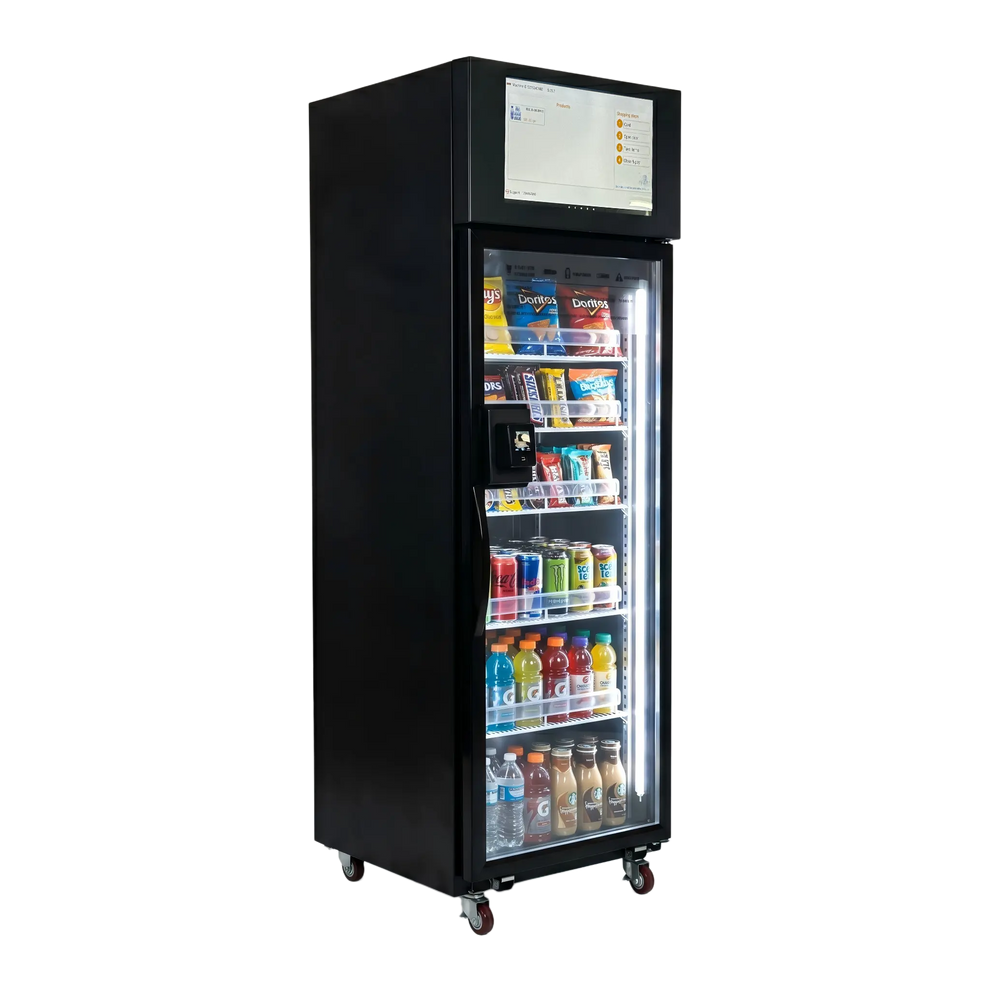
Compare identical scope: cabinet, recognition, payment, software, freight, installation, warranty, service, and end-of-term rights.
Direct answer: purchase an AI vending machine when demand is validated, the configuration is unlikely to change soon, and the operator can fund the complete deployment without starving inventory and route operations. Consider leasing when preserving cash or limiting pilot exposure is more important than minimizing lifetime cost.
The word "lease" covers very different contracts. Before comparing offers, identify who owns the machine, whether there is a purchase option, which fees can change, what happens at the end, and who carries software, payment, maintenance, damage, insurance, tax, freight, and removal obligations.
Buy, Finance, Lease, or Rent an AI Vending Machine?
Use the commercial substance of the agreement rather than its label. Local accounting and tax treatment can differ, so confirm them with qualified advisers in the deployment market.
Outright purchase
The buyer pays for the equipment and receives ownership under the contract. This offers the most control over branding, relocation, resale, and long-term use, subject to software licenses, payment approvals, warranty terms, and applicable law.
Financed purchase
A lender or finance provider funds the purchase and the operator repays principal, interest, and fees. Ownership timing and security rights depend on the agreement, but the commercial goal is usually ownership rather than temporary use.
Equipment lease or lease-to-own
The lessor owns the machine during the stated term. End-of-term options may include return, renewal, or purchase. The operator must verify the buyout formula, early-termination cost, upgrade rights, removal responsibility, and treatment of added hardware.
Short-term rental
Rental prioritizes reversibility and can fit events, seasonal demand, demonstrations, or a tightly controlled pilot. It may include more service, but operators typically have less freedom to customize, move, integrate, or retain the equipment.
Key takeaway: A low monthly payment is not a complete acquisition strategy. First establish the contract type, complete scope, ownership path, and exit cost.
AI Vending Machine Lease vs. Purchase
| Decision factor | Purchase | Finance | Lease | Short-term rental |
|---|---|---|---|---|
| Initial cash | Usually highest | Deposit, fees, and working-capital effect | Initial payment, deposits, setup, and possible advance rent | Deposit, delivery, setup, and rental charges |
| Ownership | Buyer, subject to contract and payment completion | Depends on finance and security terms | Lessor during the term; end rights vary | Rental provider |
| Lifetime equipment cost | Often lowest when used for a long period | Purchase cost plus interest and fees | Payments, fees, and any buyout or return cost | Usually optimized for flexibility rather than long-term cost |
| Customization | Broadest control, subject to technical limits | Usually similar to purchase, with lender restrictions possible | Requires approval and restoration rules | Often limited |
| Relocation | Operator-controlled, subject to venue and service constraints | May require notice or consent | May be restricted or repriced | Provider approval normally required |
| Technology change | Buyer bears obsolescence and upgrade decisions | Buyer carries asset risk while repayments continue | Upgrade rights depend on the agreement | Potentially easiest to change at renewal |
| Maintenance | Buyer responsibility except warranty or service contract | Normally buyer responsibility | Included only if the lease says so | May be bundled, but exclusions still matter |
| Exit | Keep, move, sell, or retire the asset | Settle finance obligations before an unrestricted exit | Return, renew, or buy under written terms | Return under notice, condition, and removal terms |
| Best starting fit | Proven site and stable long-term rollout | Proven economics with cash-flow constraints | Pilot or planned refresh with suitable contract terms | Event, seasonal use, demonstration, or short test |
Do not assume maintenance, software, recognition, connectivity, payment processing, insurance, taxes, freight, or site work is included in a lease. Many operating costs remain with the operator under every acquisition method.
How to Compare Vending Machine Lease and Purchase Cost
Purchase price + finance cost + freight + import + site work + installation + payment setup + software + service + insurance + tax effects + downtime cost - resale value
Initial fees + all scheduled payments + variable payments + software + service exclusions + insurance + tax effects + change fees + early-exit or end-of-term cost + return freight and restoration
Use the same currency, tax basis, period, machine configuration, payment stack, support scope, and operating assumptions. Discount future cash flows if the decision is material and the organization uses a defined cost of capital. Keep tax deductions and accounting classifications separate from operating economics.
Build a quote-normalization worksheet
| Input | Purchase offer | Lease offer | Evidence to request |
|---|---|---|---|
| Quoted equipment | Model, cabinet, cooling, shelves, cameras or sensors, controller, screen | Confirm the same configuration and ownership of additions | Itemized bill of materials and specification |
| Payment and software | Terminal, onboarding, licenses, recognition, connectivity, reports, API | Identify bundled, pass-through, and variable fees | Provider terms and fee schedule |
| Deployment | Freight, import, delivery, site work, installation, commissioning, training | Confirm who pays at installation and removal | Incoterm, shipping quote, scope of work |
| Scheduled cash | Deposit, balance, finance repayments | Deposit, rent, escalators, renewal, buyout | Complete payment schedule |
| Service and risk | Warranty, parts, labor, response, downtime, insurance | Included service, exclusions, damage, loss, downtime, replacement | Warranty, SLA, insurance requirements |
| End value or exit | Expected resale less removal and selling cost | Return, renewal, buyout, notice, condition, freight, restoration | End-of-term schedule and condition standard |
Calculate the crossover month
(Purchase cash outflow - lease initial outflow - expected purchase resale value) / (monthly lease cost - monthly ownership-only cost)
This simplified formula is only a screening tool. It fails when payments change, maintenance scopes differ, tax treatment varies, the lease includes an uncertain buyout, or the machine produces different downtime or operational results. Use dated cash flows for the final comparison.
For acquisition inputs, review the AI vending machine price guide. For recurring expenses, use the operating and maintenance cost guide.
Model rule: Replace every generic percentage or advertised payment with an itemized, dated quotation. If two offers do not include the same system and responsibilities, their totals are not comparable.
When Should You Lease or Buy an AI Vending Machine?
Buying is usually stronger when
- The site has measured traffic, demand, contribution, and service workload.
- The operator expects to use the configuration beyond the estimated crossover point.
- Working capital remains sufficient for inventory, route labor, support, and contingencies.
- Control over branding, integrations, relocation, resale, and upgrades matters.
- A maintenance and parts plan exists beyond the warranty period.
Leasing can be stronger when
- The project is a pilot with uncertain demand or an unproven location.
- Cash preservation has a documented value greater than the lease premium.
- The term matches a venue contract, seasonal program, or planned refresh.
- Included service transfers meaningful and measurable operating risk.
- The return, renewal, buyout, and early-exit terms are clear and acceptable.
Do not buy yet when
- The product matrix, temperature, payment provider, or recognition method is undecided.
- The venue agreement is shorter or less secure than the investment case assumes.
- The operator has not budgeted freight, import, site work, software, service, and working capital.
- The proposal depends on guaranteed revenue, profit, or payback claims.
Do not lease yet when
- The offer states only a monthly payment without a complete schedule.
- The lessor can change essential fees or software access without a workable exit.
- Return condition, damage, removal, freight, or restoration obligations are vague.
- Early termination and end-of-term buyout calculations are not written.
Location risk belongs in the financing decision
A machine can be technically suitable and financially wrong because the venue term is short, traffic is unverified, access is restricted, or replenishment is expensive. Qualify the site using the AI vending machine location guide, then compare the acquisition term with the venue term and downside scenario.
Decision principle: Buy after proving the operating model. Lease to control a specific risk, not merely to make the first payment look smaller.
Vending Machine Lease Contract Checklist
Commercial terms vary by provider and jurisdiction. Obtain professional legal, tax, and accounting review where appropriate. At minimum, make the following items explicit.
Equipment identity
Record model, serial number, cabinet, cooling, recognition hardware, screen, shelves, payment terminal, router, accessories, branding, software edition, and approved site.
Complete payment schedule
List deposit, advance rent, periodic payments, escalators, taxes, processing charges, insurance, late fees, variable usage or transaction fees, renewal, and buyout.
Software and data continuity
Define dashboard access, licenses, recognition, updates, integrations, export, retention, privacy roles, service suspension, end-of-term data, and the response if a provider exits.
Maintenance and downtime
Allocate preventive work, remote diagnosis, parts, local labor, travel, response targets, replacement, refrigeration loss, payment faults, software incidents, and excluded damage.
Use, move, and modify rights
State permitted products, locations, operators, wraps, shelves, payment devices, network equipment, repairs, integrations, relocation notices, and consent requirements.
End-of-term and early exit
Define notice dates, return condition, normal wear, inspection, data removal, de-branding, packing, freight, site restoration, renewal, purchase option, default, and early-termination formula.
Contract rule: The operating team should be able to explain who pays and who acts when the machine is installed, changed, offline, damaged, disputed, relocated, upgraded, returned, or purchased.
Seven Steps to Choose the Right Acquisition Method
Define the deployment
Document country, venue, products, temperature, payment, network, recognition, quantity, branding, launch date, and operating owner.
Qualify the site
Measure traffic, access, demand, competition, venue term, commission, power, connectivity, security, refill route, and service conditions.
Freeze comparable scope
Use one specification for purchase, finance, lease, and rental quotes so hardware and responsibilities remain comparable.
Model complete cash flows
Enter dated payments, taxes, recurring costs, end value, exit cost, working capital, and downside assumptions.
Review contracts and evidence
Check ownership, security, software, data, service, insurance, change, default, return, buyout, and applicable local requirements.
Test the real system
Validate products, recognition, payment, cooling, network loss, power recovery, alerts, refunds, remote tools, and support.
Pilot before scaling
Track revenue, contribution, stockouts, waste, exceptions, uptime, service workload, customer cases, and capital use against written thresholds.
Request an itemized WEIMI configuration
Send the destination, product matrix, payment market, temperature, site, quantity, support needs, and preferred acquisition path. Use the same specification to compare funding offers.
How Financing Changes AI Vending Machine ROI
Financing does not change whether customers want the products. It changes the timing and allocation of cash, interest, ownership, and risk. Calculate operating contribution before financing, then show finance payments and capital recovery separately.
Net revenue - product cost - payment - venue - route - software - connectivity - energy - cleaning - waste - refunds - service - downtime and other operating costs
Operating contribution before financing - lease or loan payments - acquisition-related cash costs
A positive cash-after-payment result does not prove that the lease is cheaper, and a negative early result does not prove that ownership is wrong. Compare cumulative cash, remaining obligations, asset value, and downside exposure across the complete decision period.
Test your operating assumptions: Use the AI vending machine ROI calculator to compare transactions per day, average basket value, gross margin and monthly operating costs. Treat the result as a planning estimate, not a financing quote. Add the quoted loan or lease payments separately to your cash-flow worksheet, avoid counting the same cost twice, and compare a lower-sales scenario before committing.
Separate four questions
- Can the site operate profitably? Test contribution before financing.
- Can the operator afford the payment schedule? Test cash flow and working capital.
- Which structure costs less over the intended use period? Compare total discounted cash and residual value.
- Which structure controls the most important risk? Compare exit, upgrade, service, and venue uncertainty.
Use the AI vending machine revenue and profit guide to build the operating model. No acquisition method can rescue an unqualified site or a product range with negative contribution.
AI Vending Machine Lease and Purchase FAQs
Is it better to lease or buy an AI vending machine?
Buying is usually better for a proven long-term site when the operator can fund the complete deployment and support plan. Leasing can be better for a pilot, temporary placement, planned refresh, or documented working-capital need. Compare total cost, obligations, residual value, and downside risk.
Can you lease an AI vending machine?
Availability depends on the supplier, finance partner, buyer, country, machine configuration, order size, credit assessment, and intended use. Ask whether the offer is a rental, operating lease, finance lease, or lease-to-own agreement and obtain the complete written terms.
How much does it cost to lease a vending machine?
There is no reliable universal monthly price. Cost depends on equipment value, term, deposit, interest or finance charge, credit, taxes, service, software, payment hardware, freight, installation, insurance, usage fees, buyout, and return obligations. Request an itemized payment schedule.
Is lease-to-own the same as buying?
No. Under lease-to-own, the lessor may retain ownership until the agreement and purchase option are completed. Payments, early termination, default, maintenance, modifications, relocation, insurance, and end-of-term rights can differ from an outright or financed purchase.
What costs are usually excluded from a vending machine lease?
Exclusions vary, but freight, import, site work, payment processing, software, connectivity, inventory, route labor, insurance, taxes, damage, consumables, local service, removal, return freight, and restoration may remain with the operator. The contract controls.
Does leasing include maintenance and software?
Only when the agreement lists the included maintenance and software scope. Confirm preventive work, parts, labor, travel, response, replacement, updates, recognition, dashboard, data, integrations, support hours, and exclusions instead of relying on the word full-service.
When does buying become cheaper than leasing?
The crossover occurs when cumulative ownership cost, adjusted for finance cost, maintenance, tax treatment, and expected resale value, becomes lower than cumulative lease payments and exit costs for comparable scope. Calculate it from dated quotes rather than a generic industry average.
Should a startup lease its first vending machine?
A lease may protect cash and limit pilot exposure, but it can also create fixed obligations before demand is proven. A startup should first validate the site, product economics, venue term, payment setup, service route, and downside case, then compare lease, purchase, and smaller-pilot options.
What happens at the end of a vending machine lease?
The agreement may require return, allow renewal, or provide a purchase option. Confirm notice deadlines, buyout calculation, machine condition, normal wear, inspection, data removal, de-branding, packing, freight, site restoration, and charges before signing.
What information is needed for a WEIMI quotation?
Provide the destination country and postal code, quantity, venue, products and package dimensions, temperature, payment methods, connectivity, software needs, electrical standard, branding, target date, service expectations, and preferred acquisition or funding approach.
WEIMI Cost, Revenue, and Procurement Resources
- WEIMI AI Vending Machine Configurations
- AI Vending Machine Price Guide
- AI Vending Total-Cost Guide
- Operating and Maintenance Costs
- AI Vending Revenue and Profit Guide
- AI Vending Location Guide
- AI Vending Supplier Guide
- WEIMI Project Contact
Updated August 2026. Acquisition, finance, lease, rental, tax, accounting, insurance, software, service, and end-of-term terms vary by provider, buyer, destination, configuration, and contract. This guide provides a comparison framework, not legal, tax, accounting, investment, or credit advice. The signed agreements and qualified local advice control.


