
AI Vending Machine Revenue in 2026: Real Operator Results
AI vending machine revenue is the gross value of completed sales during a defined period. It is not profit. A reliable operator result must identify the machine count, dates, locations, paid baskets, refunds, taxes, product cost, venue terms, payment fees, route labor, software, maintenance, downtime, and capital treatment.
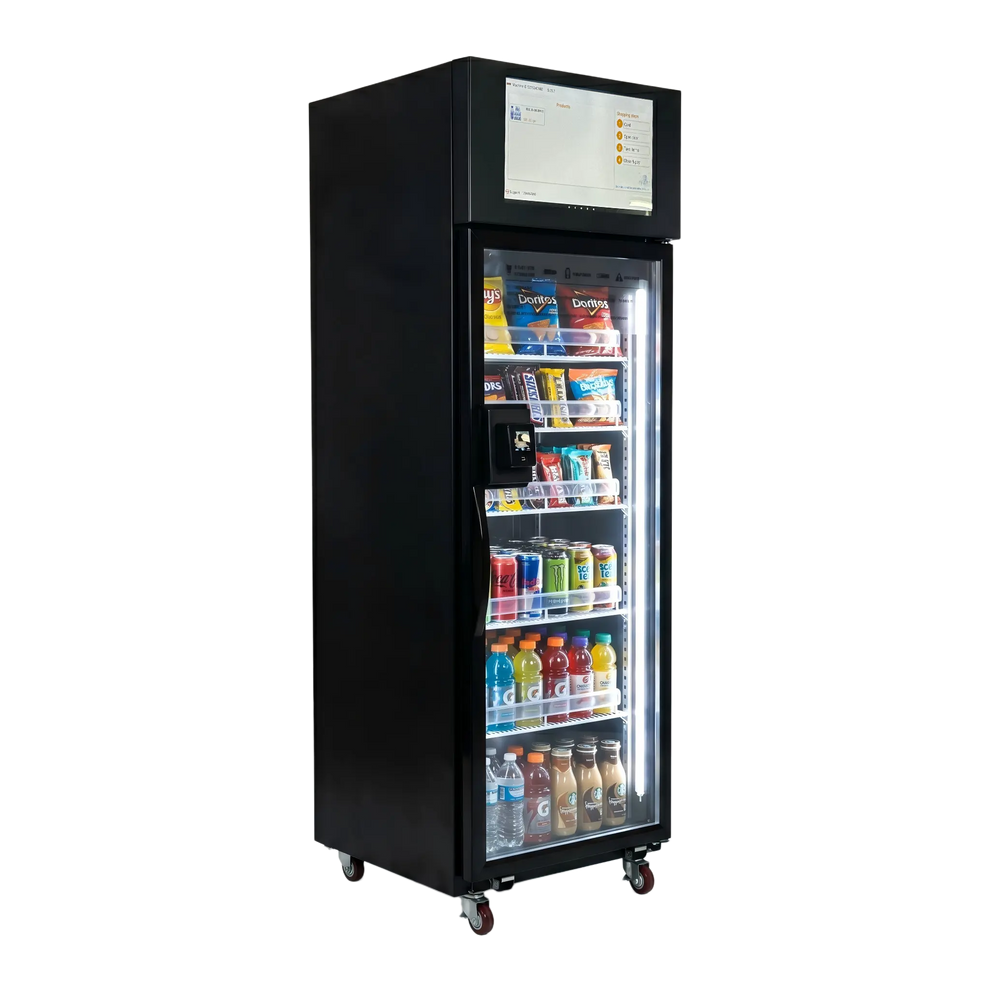
Evidence before claims: use transaction exports, processor settlements, invoices, route logs, refunds, and machine uptime.
Direct answer: There is no responsible universal monthly revenue for an AI vending machine. Actual sales depend on the location, qualified traffic, operating hours, product need, availability, prices, basket size, payment acceptance, competition, seasonality, and uptime. Profit then depends on the complete cost structure.
This guide replaces promotional revenue promises with an auditable method for calculating actual monthly sales, comparing operator results, testing profitability, and deciding whether a pilot is ready to scale.
AI Vending Machine Revenue, Profit, and Cash Flow
Operators and suppliers often use the same word for different financial outcomes. Define the metric before comparing any result.
| Metric | Definition | Required evidence | Common mistake |
|---|---|---|---|
| Gross sales | Value recorded before discounts, refunds, tax adjustments, or failed settlement | Machine transaction export and product-level records | Calling every initiated basket revenue |
| Net revenue | Completed sales after discounts, cancellations, refunds, and the chosen tax treatment | Transaction export reconciled to processor settlement | Ignoring refunds, reversals, and settlement differences |
| Gross profit | Net revenue minus landed cost of products sold | Sales by SKU, purchase invoices, freight allocation, waste and shrink records | Using retail markup as realized margin |
| Contribution after operations | Gross profit minus payment, venue, route, platform, energy, cleaning, service, waste, and other operating costs | Invoices, contracts, payroll or labor allocation, route logs, and service records | Calling gross profit net profit |
| Operating profit | Contribution after the operator's defined overhead and capital treatment | Management accounts with a consistent allocation policy | Excluding owner labor, depreciation, financing, or central overhead without disclosure |
| Cash flow | Cash received and paid during the period | Bank, processor, inventory, financing, tax, and supplier records | Assuming accounting profit equals available cash |
Key takeaway: A credible monthly result begins with a named period and ends with a reconciliation. A screenshot of a sales dashboard is not proof of profit.
How to Calculate AI Vending Machine Revenue per Month
Completed paid baskets x average net basket value (after discounts, refunds, reversals, and excluded tax)
If a machine records item-level sales rather than basket totals, calculate revenue from units sold by SKU and reconcile the result to paid settlements. Use one consistent time zone and cut-off. Separate test transactions, staff use, subsidies, free vends, and failed sessions.
Test your own monthly revenue assumptions
Enter expected daily transactions, average transaction value, operating days, gross margin, machine investment, and recurring costs. The calculator produces a planning scenario—not an actual operator result or guaranteed outcome.
Illustrative scenario - not an operator result
The table below demonstrates the calculation using hypothetical assumptions. It is not a forecast, guarantee, market average, or WEIMI customer result.
| Input | Downside scenario | Base scenario | Strong-demand scenario | Replace with |
|---|---|---|---|---|
| Completed baskets per day | 8 | 18 | 32 | Transaction export |
| Average net basket | $5 | $6 | $7 | Net sales / paid baskets |
| Operating days | 30 | 30 | 30 | Available selling days |
| Illustrative monthly revenue | $1,200 | $3,240 | $6,720 | Baskets x basket value |
The arithmetic is transparent, but the demand assumptions are not facts until a representative pilot produces them. Change one variable at a time, document the source, and compare downside, expected, and strong-demand cases.
Calculate revenue per available day and hour
A machine that operates for only part of a month should not be compared with a full-month site. Track revenue per available day, per open hour, per 100 qualified visitors, and per square foot or meter where useful. Separate planned closure, stockout, payment failure, cooling failure, recognition failure, network outage, and venue closure.
Model rule: Revenue is transactions multiplied by basket value. Traffic, conversion, availability, and assortment explain why those two numbers change.
What Counts as a Real AI Vending Machine Operator Result?
Public revenue claims vary in quality. Some are audited company disclosures; others are supplier scenarios, anonymous posts, selected dashboard screenshots, or estimates. Treat the word "actual" as an evidence question, not a formatting choice.
Level 1: reconciled operating record
Machine transactions match payment settlements and are supported by SKU cost, venue, route, platform, service, refund, and uptime records for a named period and machine count.
Level 2: transaction export
A complete machine report shows completed baskets, products, discounts, refunds, and dates, but expenses or processor reconciliation may be incomplete.
Level 3: dashboard screenshot
A screenshot can show a selected sales total but may omit date filters, machine count, failed settlement, refunds, taxes, costs, and downtime.
Level 4: model or anecdote
A supplier example, forum post, social claim, or projected payback can suggest variables to test but is not a benchmark for another site.
Minimum disclosure for comparable results
- Country, currency, tax treatment, date range, machine count, and site type.
- Operating days and hours, available hours, stockout time, and functional downtime.
- Paid baskets, units, average basket, discounts, refunds, chargebacks, and settlement.
- Products, landed cost, waste, shrink, selling prices, and gross profit.
- Venue fee, payment cost, software, connectivity, energy, cleaning, insurance, and compliance.
- Route distance, visit frequency, stop time, labor, maintenance, parts, and emergency visits.
- Whether owner labor, financing, depreciation, tax, and overhead are included.
The previous version of this page repeated selected third-party revenue, margin, payback, and labor claims that were not comparable on a common scope. Those numbers have been removed because the underlying configurations, accounting methods, sites, periods, and complete costs were not consistently verifiable.
Evidence principle: A result becomes useful when another buyer can understand what was measured, what was excluded, and why the site performed that way.
What Drives AI Vending Machine Sales?
| Driver | Why it changes revenue | Metric to track | Operator action |
|---|---|---|---|
| Qualified traffic | People must encounter a relevant need, not merely pass the machine | Qualified visitors, sessions, conversion | Survey audience, need state, dwell time, alternatives, and access |
| Availability | Closed, offline, empty, or failed functions cannot convert demand | Uptime by function and stockout hours | Use alerts, refill thresholds, backup connectivity, and response ownership |
| Assortment fit | The site must want the products, pack sizes, prices, and temperature offered | Sales by SKU, no-sale facings, substitutions, waste | Test a focused planogram and replace weak items from measured demand |
| Basket value | Multi-item access can increase sales per session when the assortment supports it | Units per basket and net basket value | Use complementary products, visible pricing, and adequate shelf availability |
| Price and value | Convenience supports a price only when the customer accepts the total offer | Conversion, margin, price response, repeat use | Test prices without hiding fees or sacrificing contribution |
| Payment acceptance | Declines, unsupported wallets, holds, and poor instructions abandon demand | Authorization, completion, reversal, and refund rates | Approve the regional payment stack and monitor the full transaction funnel |
| Recognition experience | Errors and disputes reduce trust and add corrections | Exceptions, correction value, review time, repeat complaints | Control catalog, packaging, lighting, shelves, tests, and support |
| Repeat behavior | Recurring users can stabilize demand beyond launch novelty | Returning customers where lawfully measurable, cohort sales, weekday pattern | Keep the core assortment available and learn the site's purchase rhythm |
AI changes operations, not demand by itself
Camera recognition, remote inventory, alerts, pricing controls, and sales reporting can reduce friction and improve decisions. They do not create qualified traffic or product need. Evaluate the complete customer journey and the operating workflow that uses the data.
Use the AI vending location guide to qualify the site and the AI camera recognition guide to understand basket identification.
Are AI Vending Machines Profitable?
They can be profitable when realized gross profit exceeds payment, venue, route, platform, energy, cleaning, waste, customer support, maintenance, downtime, capital, and overhead costs over a representative period. No machine type or supplier can guarantee that outcome for an untested site.
Net revenue - landed product cost - payment - venue - route labor - software and connectivity - energy - cleaning - waste and shrink - maintenance - downtime and other site costs
Break-even baskets per month
Monthly fixed operating costs / contribution per basket before fixed costs
Contribution per basket before fixed costs equals net basket revenue minus product cost and other basket-linked costs such as transaction fees, variable venue share, bags, variable recognition charges. Refunds and reversals already deducted from net revenue must not be deducted again as operating costs. Record any separate refund-processing or dispute fees once in the relevant payment-cost category. If the result is zero or negative, more volume will not fix the model.
Payback is not the same as profitability
A site may produce positive monthly contribution but still take a long time to recover equipment, freight, import, installation, payment setup, initial inventory, branding, and working capital. Define whether payback uses cash investment, financed cost, tax effects, depreciation, salvage value, and owner labor. Use the AI vending machine cost guide for acquisition scope and the operating and maintenance cost guide for recurring costs.
Run sensitivity tests
Test what happens when transactions, basket value, product margin, venue share, waste, route time, payment cost, uptime, or service expense moves against the plan. A credible business case survives a reasonable downside; it does not require every assumption to be optimistic.
Profitability answer: Profit is site-specific and measurable. Use contribution, break-even volume, cash flow, and downside sensitivity rather than a universal profit percentage.
Measure a 90-Day AI Vending Pilot
A 90-day window can reveal weekday patterns, replenishment workload, product fit, repeat use, and common exceptions, but some sites need longer to capture seasonality. Define the clock, acceptance criteria, and decision rules before launch.
Freeze the baseline
Record expected traffic, alternatives, site terms, product assumptions, service route, investment, and decision thresholds.
Validate the machine
Test products, recognition, payments, cooling, locks, network, alerts, refunds, remote controls, and recovery.
Record daily evidence
Capture sales, baskets, units, stockouts, waste, refunds, exceptions, availability, alarms, visits, and labor.
Reconcile monthly
Match machine transactions to settlement, invoices, inventory movement, refunds, venue cost, route work, and service.
Explain variance
Separate traffic, conversion, basket, availability, assortment, price, seasonality, and operating causes.
Scale or correct
Scale only when contribution, service burden, customer outcomes, and downside risk meet the written threshold.
Monthly operator scorecard
- Net revenue, paid baskets, units, average basket, and revenue per available day.
- Gross profit, contribution after operations, cash movement, and break-even gap.
- Product availability, stockout hours, waste, shrink, and inventory days.
- Payment completion, refunds, chargebacks, recognition exceptions, and customer contacts.
- Uptime by cooling, lock, payment, recognition, network, and complete selling function.
- Route visits, distance, time per stop, emergency visits, maintenance, and repeat faults.
Build a configuration-specific pilot
Send WEIMI the destination, site, products, temperature, payment, connectivity, planned quantity, service model, and acceptance criteria.
Revenue Questions to Ask an AI Vending Supplier
What is fact and what is a scenario?
Ask the supplier to label audited records, customer reports, dashboard examples, projections, test transactions, and marketing illustrations separately.
What configuration produced the result?
Record cabinet, temperature, capacity, payments, software, recognition, site type, products, period, machine count, and country.
Which fees scale with sales?
Identify payment, recognition, software, platform, data, API, venue, refund, support, and connectivity charges by machine and transaction.
Which operating data can be exported?
Confirm transaction, SKU, inventory, price, discount, refund, exception, temperature, alarm, uptime, user, and audit-log exports.
How are exceptions corrected?
Define failed authorization, disputed basket, recognition review, refund, network outage, stock discrepancy, customer support, and evidence retention.
What must the operator still do?
List procurement, receiving, storage, loading, cleaning, route planning, reconciliation, compliance, service, customer support, and data tasks.
Buying principle: Select a system that lets the operator measure and improve the economics. A revenue promise without exportable evidence is not an operating control.
AI Vending Machine Revenue FAQs
How much revenue does an AI vending machine make per month?
There is no universal amount. Monthly revenue equals completed paid baskets multiplied by average net basket value, adjusted for refunds, reversals, taxes, and operating days. Location, product fit, availability, prices, payment acceptance, and repeat demand determine the actual result.
Are AI vending machines profitable?
They can be profitable when gross profit exceeds venue, payment, route, software, connectivity, energy, cleaning, waste, refunds, service, downtime, capital, and overhead costs. Profitability must be measured for the specific site and period.
What is the difference between vending machine revenue and profit?
Revenue is sales before expenses. Gross profit subtracts landed product cost. Contribution subtracts operating costs. Operating or net profit also applies the operator's stated overhead, capital, tax, and accounting treatment.
How do you calculate monthly vending machine revenue?
Use completed paid transactions from the machine, reconcile them to processor settlement, subtract refunds and reversals, apply a consistent tax treatment, and report the date range, machine count, operating days, and currency.
What is a good average basket for an AI vending machine?
There is no universal benchmark. A useful basket is one that customers accept and that produces positive contribution after product and transaction-linked costs. Compare the site's actual basket by product mix, customer group, daypart, and repeat behavior.
What counts as a real operator result?
The strongest result reconciles machine transactions with payment settlement, product invoices, inventory, refunds, venue cost, route labor, platform fees, maintenance, and uptime for a named period, machine count, location type, and accounting scope.
How long should an AI vending pilot run?
A 90-day pilot can reveal recurring demand and operating workload, but the right period depends on site ramp-up, seasonality, operating calendar, product cycle, and sample size. Set decision thresholds before launch.
How do AI vending machines increase revenue?
They can support multi-item baskets, broader assortments, remote inventory visibility, pricing control, alerts, and convenient access. These capabilities improve results only when the site has qualified demand and the operator keeps the machine available and well stocked.
How is break-even sales volume calculated?
Divide monthly fixed operating costs by contribution per basket before fixed costs. Contribution per basket is net basket revenue minus product cost and basket-linked fees. Include a downside allowance for refunds, waste, downtime, and service.
What data should an AI vending platform export?
Useful exports include transactions, products, prices, discounts, refunds, payment status, inventory, stockouts, recognition exceptions, customer corrections, temperature, alarms, uptime, user actions, and remote changes with timestamps.
WEIMI Revenue and Planning Resources
- WEIMI AI Vending Machines
- How AI Vending Machines Work
- AI Camera Recognition Guide
- AI Vending Location Guide
- AI Vending Machine Cost Guide
- Operating and Maintenance Costs
- AI Vending Pros, Cons, Costs, and ROI
- Contact WEIMI
Updated August 2026. All revenue, cost, profit, break-even, and payback results depend on the site, products, prices, machine, contracts, taxes, labor, service, accounting scope, and measurement period. Hypothetical scenarios in this guide are examples, not forecasts or guarantees.


